- Featured image
- Image gallery
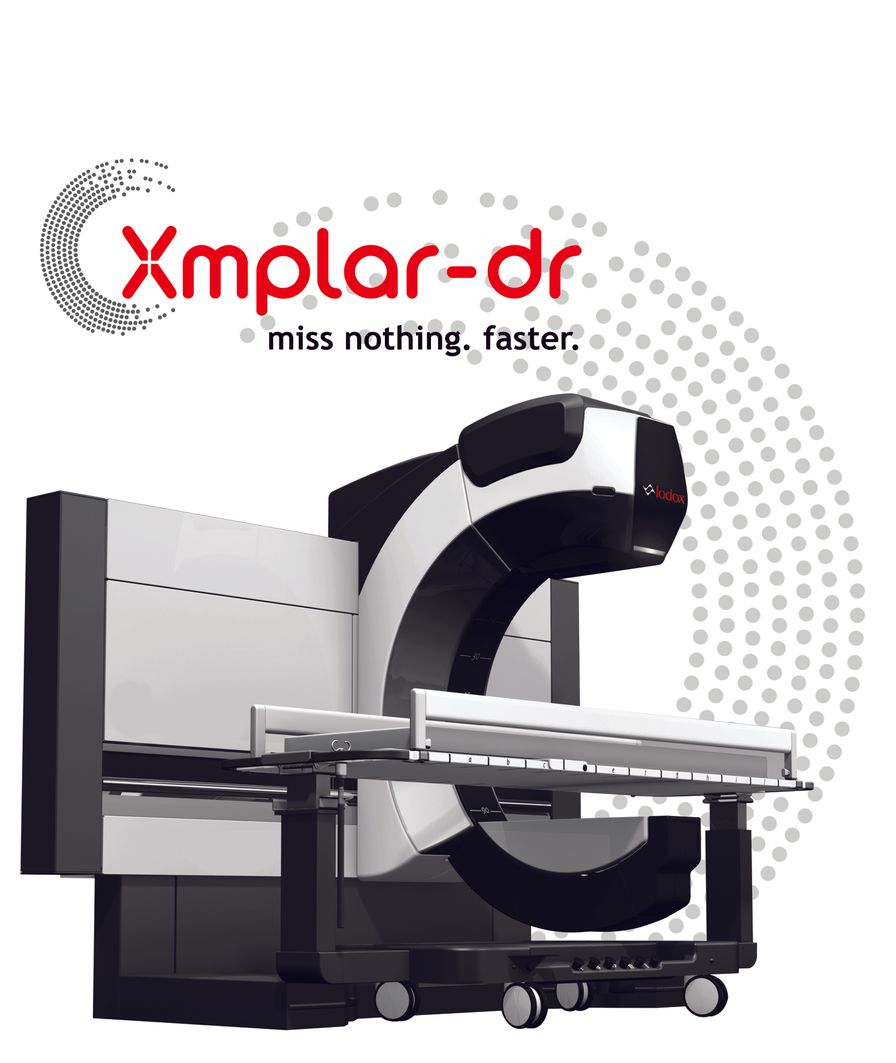
Lodox Xmplar-dr
- Summary
Full-body, high-speed digital radiology with low radiation emission and scatter.
The Lodox plays a significant role in the initial management of trauma patients and is an important advance in the trauma imaging repertoire. The remarkable detection rate for injuries, low radiation dose and speed at which the whole body can be evaluated are advantages in the primary survey of acute trauma patients. Lodox provides time-saving, low dose investigation for emergency units with minimal interference in initial resuscitation.
- Category
- Lodox Full-Body Scanner

- Tabs
Medical Applications
- Content
Poly-trauma / Gunshot wounds / Foreign body ingestion /Skeletal survey / Urinary stones / Mass disasters /Ventriculorperitoneal shunts / Paediatric imaging / Bariatric imaging / Trauma in military medicine
Full-Body
- Content
Lodox provides a single (non-stitched), high-resolution radiographic image of the entire body. Lodox visualises
skeletal, chest and pelvic pathologies ‘all-in-one’, and more accurately than conventional X-ray, in the primary
trauma survey. Full-body imaging allows a better understanding of the patient’s entire injury pattern.
Rapid Acquisition
- Content
A full-body trauma imaging study in two planes can be performed on the Lodox X-ray machine in 3-6 minutes. Rapid acquisition of radiographic detail is particularly important in ATLS resuscitation, where time predicts outcomes.
Low Radiation
- Content
Radiation emission and scatter are significantly lower than for conventional X-ray equipment. Together, these features improve safety for staff, significantly reduce radiation dose to patients, and allow uninterrupted resuscitation during imaging. Significantly lower radiation dose and high diagnostic image quality make Lodox a first-choice for paediatric poly-trauma.
Image Quality
- Content
Lodox high-definition, high-contrast images have been found to be better than or equal to conventional X-ray images for the detection of thoracic, pulmonary, mediastinal, pelvic and peripheral injuries. The unique, focused fan-beam of the linear slot-scanning technology improves image quality by reducing patient scatter image degradation, especially in larger patients.
- Videos